

It’s been a terrible, horrible, no good, very bad decade for bonds. It’s not just an inflation story, real yields are at a record. Whether it’s growth, deficits or central banks, there’s a lot of upward pressure. Any asset can be attractive at the right price. The first cracks are showing in credit. Higher rates are good for some assets. Why would I lie to you?
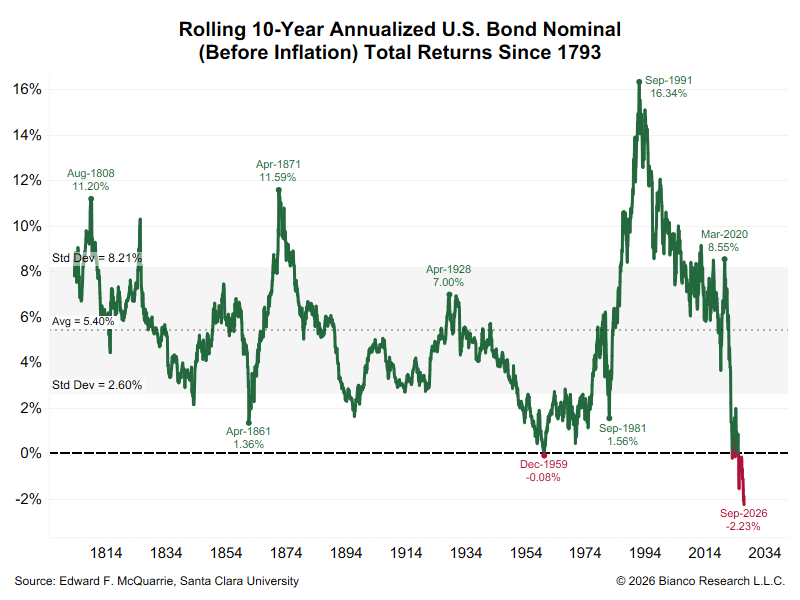
1. U.S. long-term bonds just had their worst decade on record going back to 1793, losing just over 2% a year before inflation:
 Source:
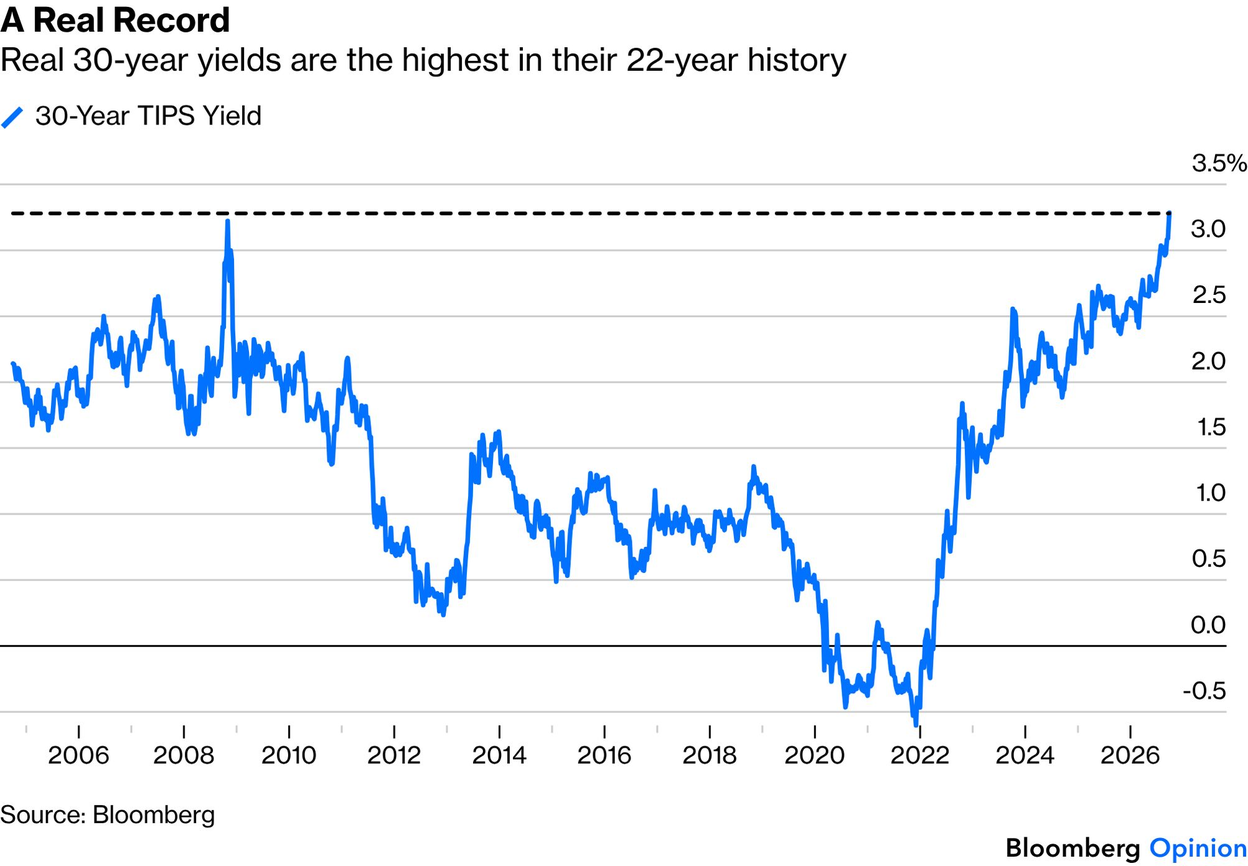
2. Investors are demanding higher real returns to own bonds:
 Source: John Authers, Points of Return on 9/29/2026
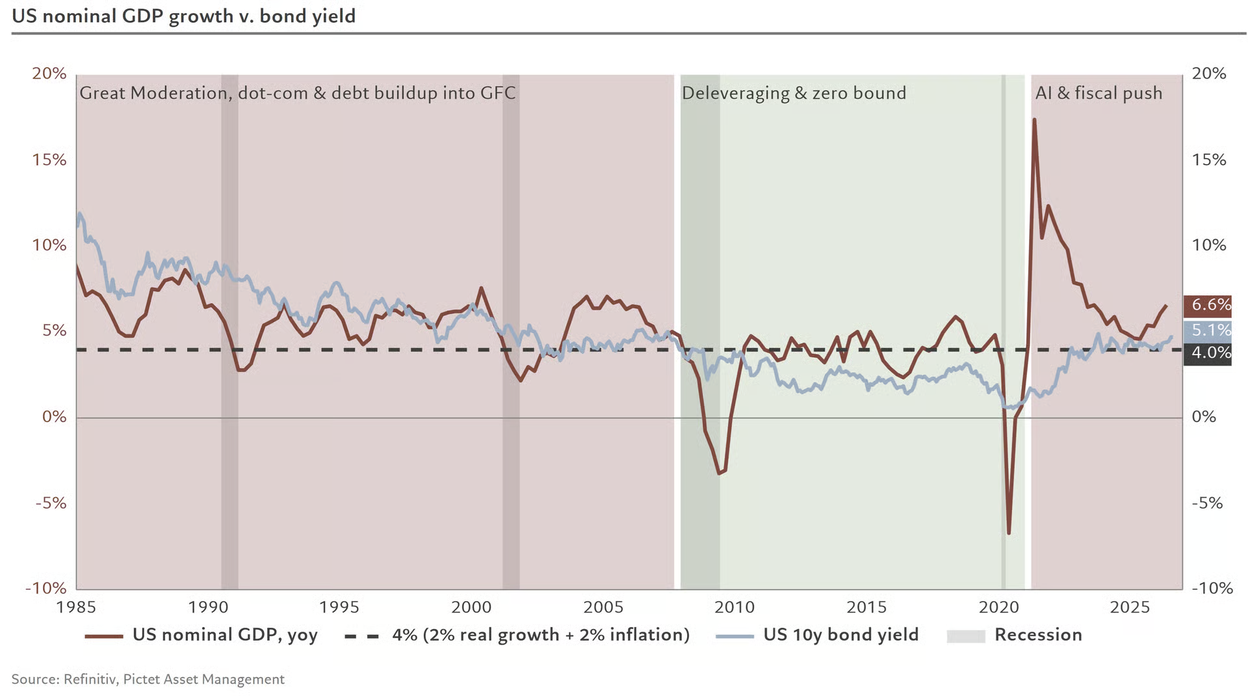
3. With nominal GDP growth running above 6%, rates may still be on the lower side of fair:
 Source: @steve_donze via the Daily Chartbook on 9/24/2026
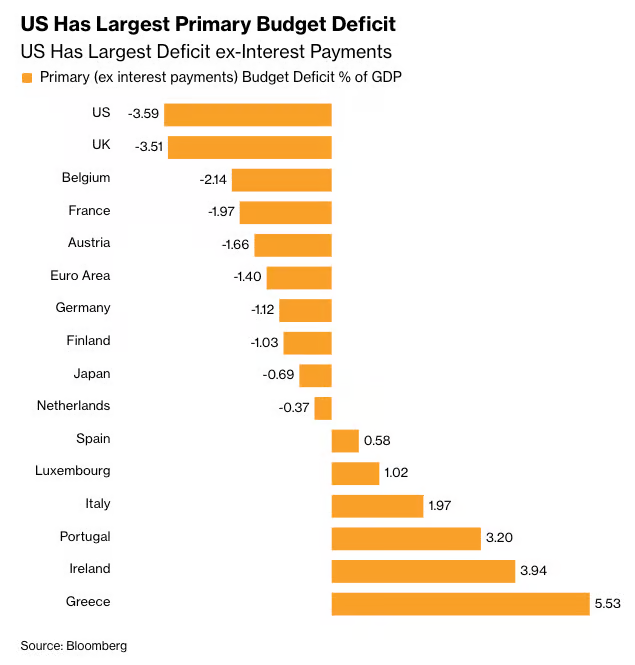
4. The U.S. runs one of the largest budget deficits in the developed world:
 Source: Simon White, Bloomberg via the Daily Chartbook on 8/27/2026
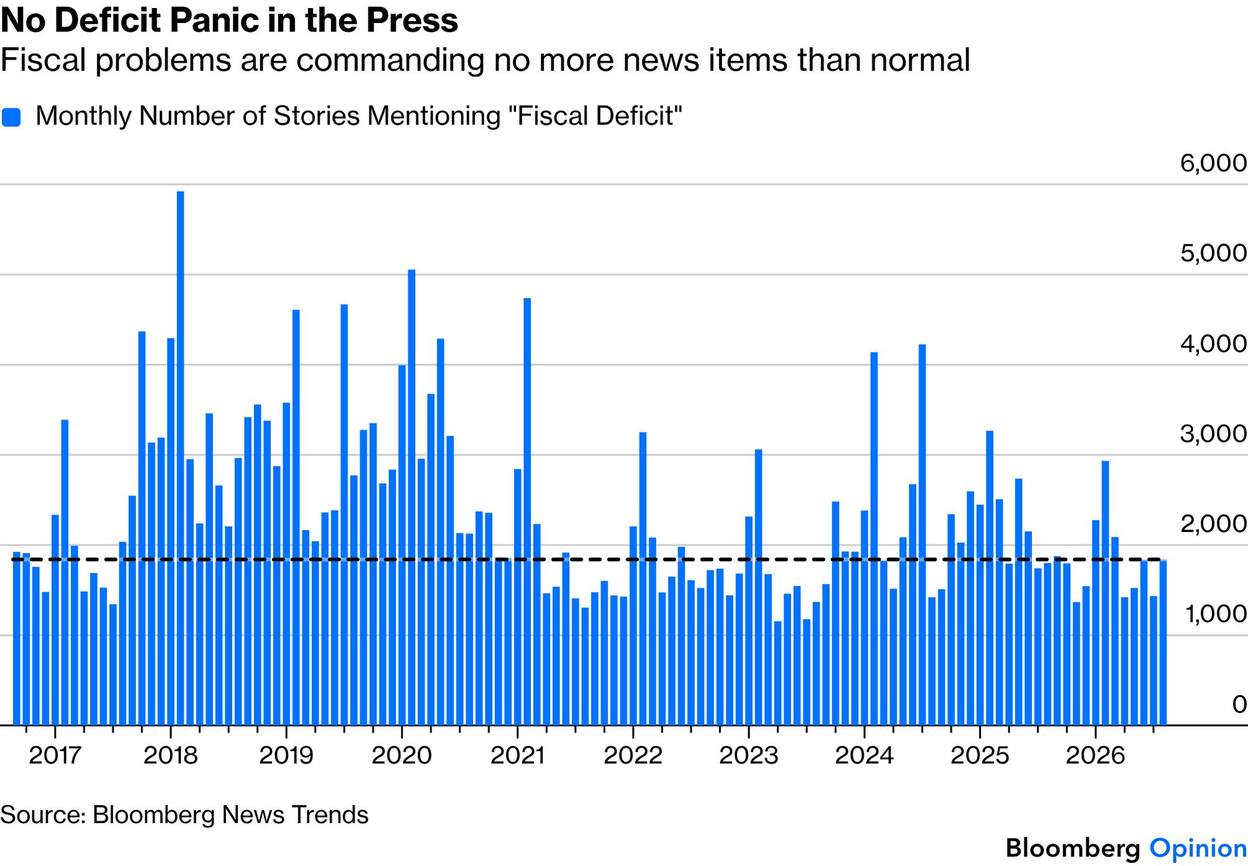
5. Yet the deficit hawks are nowhere to be found:
 Source: John Authers, Points of Return
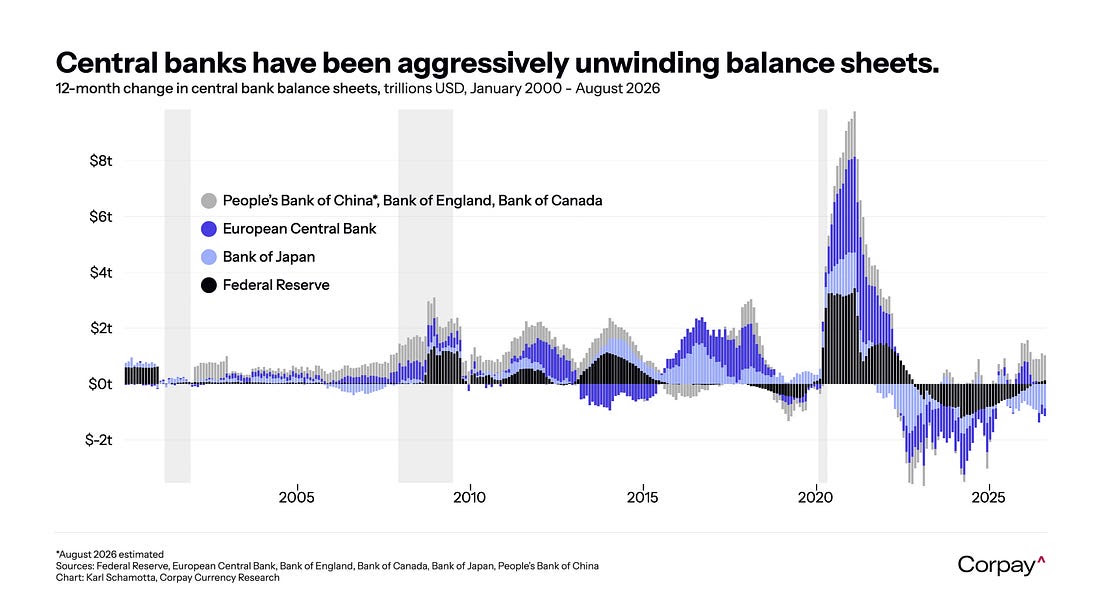
6. Central banks have spent most of the last four years shrinking their balance sheets:
 Source: Chartbook a newsletter from Adam Tooze
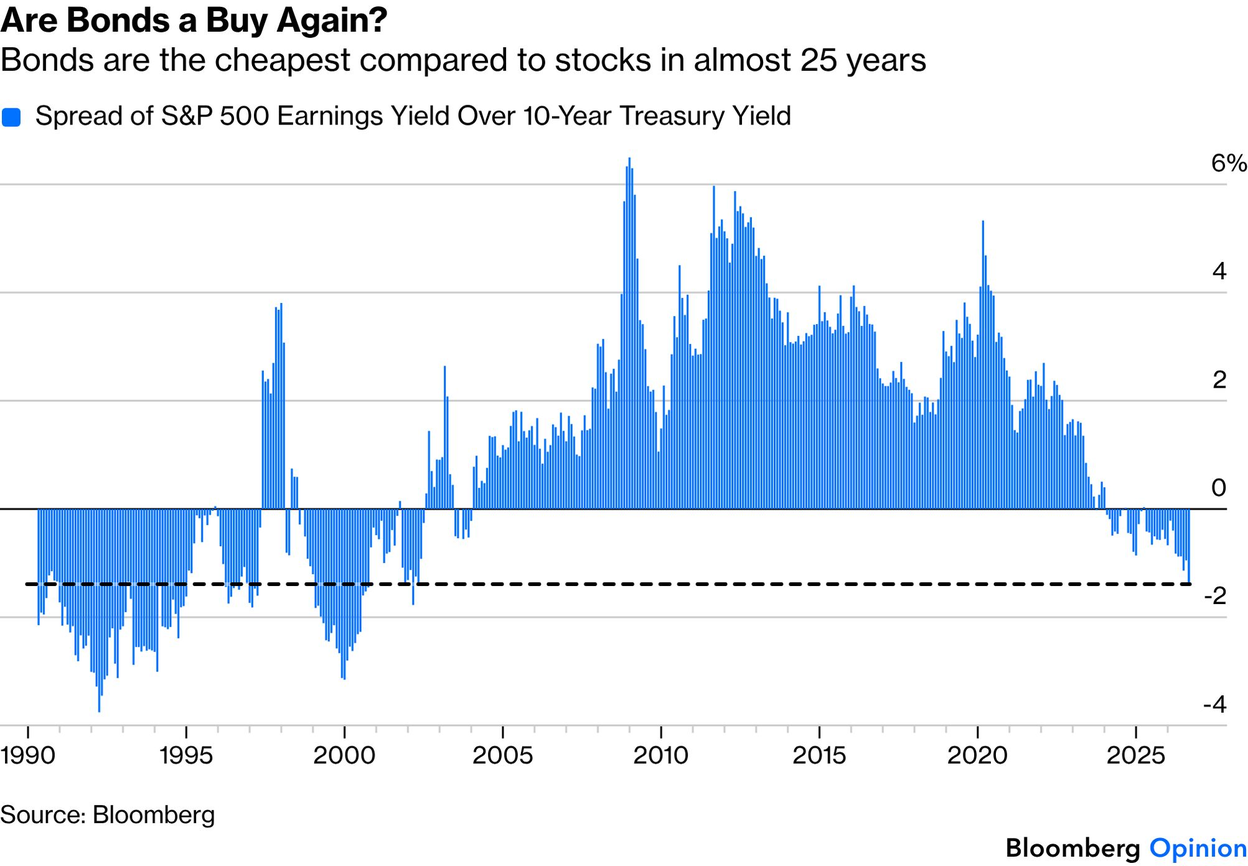
7. Remember, investing means buying future returns, not past ones:
 Source: John Authers, Points of Return
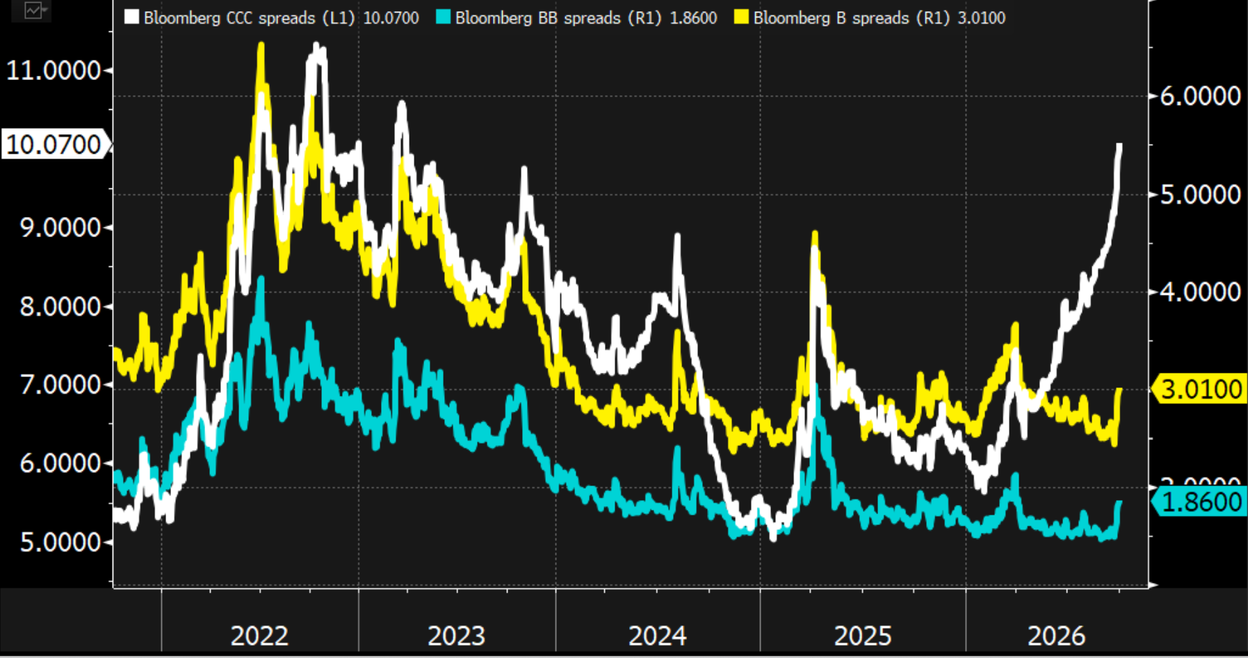
8. Credit spreads are finally showing signs of life. CCC spreads are above 10 percentage points while B and BB spreads have only just started to move:
 Source: Bloomberg Odd Lots
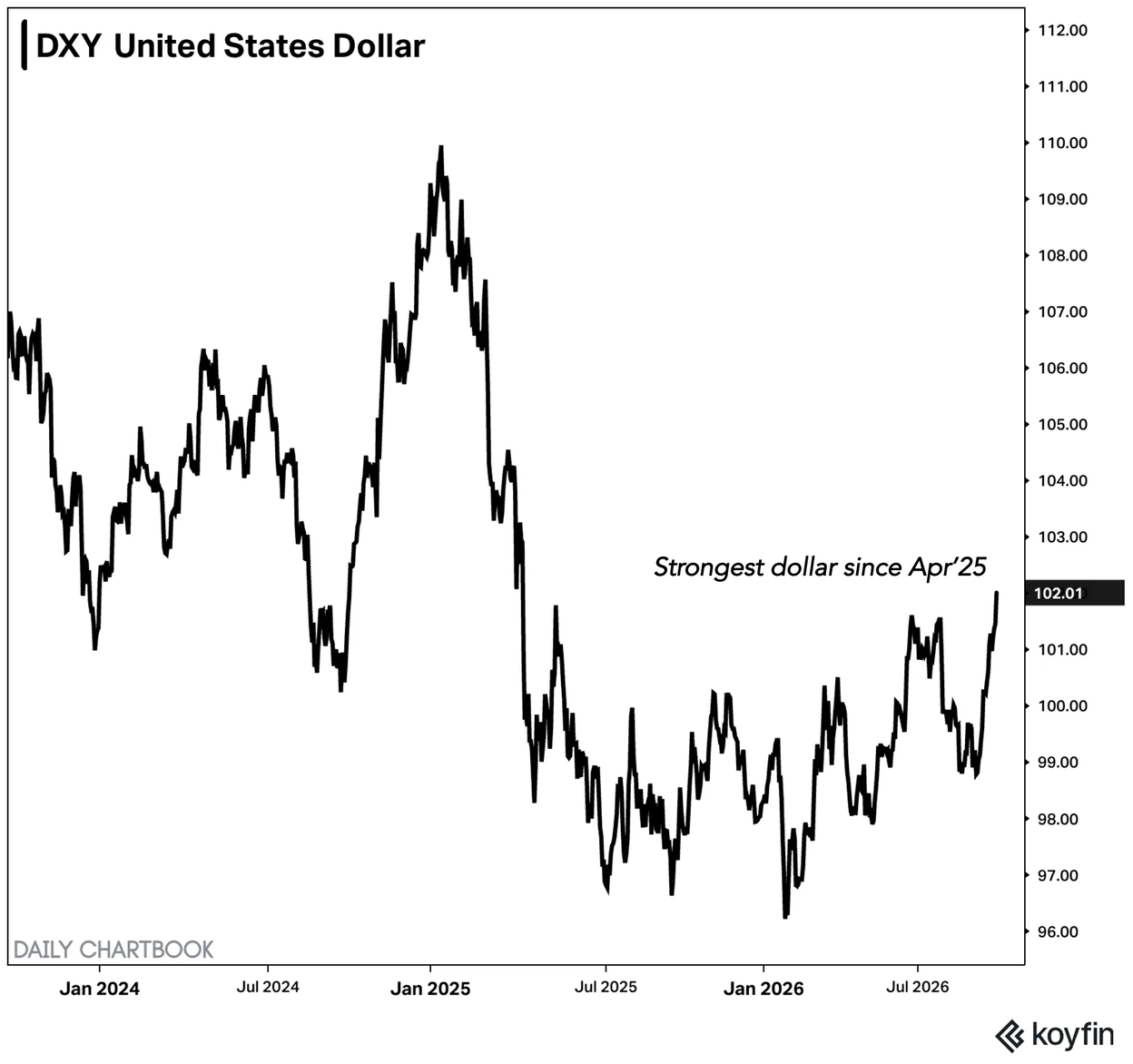
9. The dollar is at its strongest level in over a year:
 Source: Koyfin via the Daily Chartbook on 10/1/2026
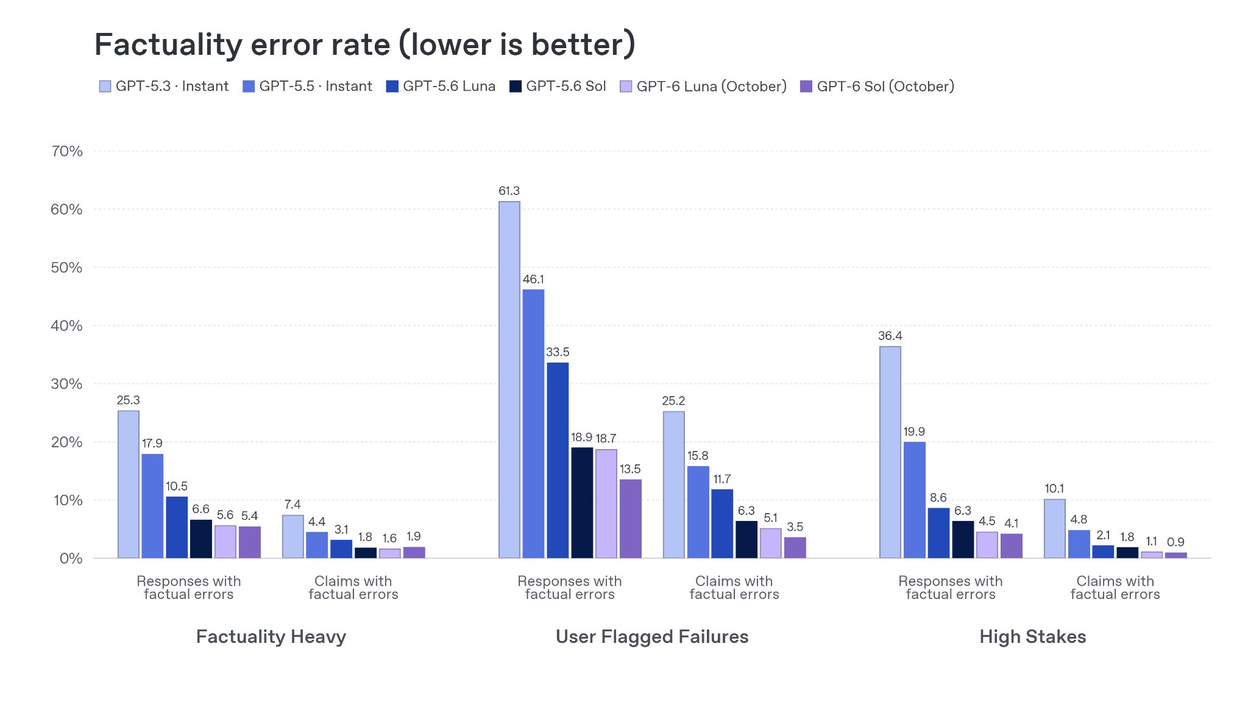
10. AI has gotten much better at telling the truth:
 Source: @AndrewCurran_
Disclosures:
Copyright © 2026 Algorithmic Investment Models LLC (AIM). All rights reserved. All materials appearing in this commentary are protected by copyright as a collective work or compilation under U.S. copyright laws and are the property of Algorithmic Investment Models. You may not copy, reproduce, publish, use, create derivative works, transmit, sell or in any way exploit any content, in whole or in part, in this commentary without express permission from Algorithmic Investment Models.
Certain information contained herein constitutes “forward-looking statements,” which can be identified by the use of forward-looking terminology such as “may,” “will,” “should,” “expect,” “anticipate,” “project,” “estimate,” “intend,” “continue,” or “believe,” or the negatives thereof or other variations thereon or comparable terminology. Due to various risks and uncertainties, actual events, results or actual performance may differ materially from those reflected or contemplated in such forward-looking statements. Nothing contained herein may be relied upon as a guarantee, promise, assurance or a representation as to the future.
This material is provided for informational purposes only and does not in any sense constitute a solicitation or offer for the purchase or sale of a specific security or other investment options, nor does it constitute investment advice for any person. The material may contain forward or backward-looking statements regarding intent, beliefs regarding current or past expectations. The views expressed are also subject to change based on market and other conditions. The information presented in this report is based on data obtained from third party sources. Although it is believed to be accurate, no representation or warranty is made as to its accuracy or completeness.
The charts and infographics contained in this blog are typically based on data obtained from third parties and are believed to be accurate. The commentary included is the opinion of the author and subject to change at any time. Any reference to specific securities or investments are for illustrative purposes only and are not intended as investment advice nor are they a recommendation to take any action. Individual securities mentioned may be held in client accounts. Past performance is no guarantee of future results.
As with all investments, there are associated inherent risks including loss of principal. Stock markets, especially foreign markets, are volatile and can decline significantly in response to adverse issuer, political, regulatory, market, or economic developments. Sector and factor investments concentrate in a particular industry or investment attribute, and the investments’ performance could depend heavily on the performance of that industry or attribute and be more volatile than the performance of less concentrated investment options and the market as a whole. Securities of companies with smaller market capitalizations tend to be more volatile and less liquid than larger company stocks. Foreign markets, particularly emerging markets, can be more volatile than U.S. markets due to increased political, regulatory, social or economic uncertainties. Fixed Income investments have exposure to credit, interest rate, market, and inflation risk. Diversification does not ensure a profit or guarantee against a loss.
A real yield is the yield on a bond after adjusting for expected inflation; it is commonly measured by the yield on Treasury Inflation-Protected Securities (TIPS). Nominal GDP is the total value of goods and services produced in an economy measured at current prices, without adjusting for inflation. The 10-Year Treasury Yield represents the interest rate on U.S. government debt securities with a maturity of ten years and is commonly used as a benchmark for long-term interest rates. The primary budget deficit is a government’s budget deficit excluding interest payments on its debt. A central bank’s balance sheet reports the assets it holds, such as government bonds and other securities acquired through asset purchases, and the liabilities, such as currency and bank reserves, that fund them. The S&P 500 Index measures the performance of 500 large-capitalization U.S. companies. The earnings yield spread is the difference between the earnings yield of an equity index (its earnings divided by its price) and a government bond yield, often used to compare the relative valuation of stocks and bonds. The Bloomberg US Corporate High Yield Index measures the performance of U.S. dollar-denominated, fixed-rate, below-investment-grade corporate bonds; its sub-indices group bonds by credit rating (such as BB, B and CCC/Caa). The U.S. Dollar Index is a geometrically-averaged calculation of six currencies weighted against the U.S. dollar. Inflation is the rate at which the general level of prices for goods and services rises over time, resulting in a decline in purchasing power. Gross domestic product (GDP) is the total monetary value of all finished goods and services produced within a country’s borders during a specific period and is a broad measure of overall economic activity. A credit spread is the difference in yield between a corporate bond and a government bond of similar maturity, reflecting the additional compensation investors require for credit risk.
Please contact your AIM Regional Consultant for more information or to address any questions that you may have.
Algorithmic Investment Models LLC (AIM), 125 Newbury St. 4th Floor, Boston, MA 02116 (844-401-7699)